 Recently a student gave me the surprise gift of a small thumb piano. Have you ever seen one? Have you ever heard one played really well? An instrument that makes sound by vibrating when it is plucked, the thumb piano comes from Sub-Saharan Africa and has many different names there (kalimba and mbira are two). I hopped on youtube and found the following amazing clip of Ruth from Uganda playing the thumb piano with Bela Fleck on banjo. Musicians the world over make beautiful music that can connect with people everywhere. Music is our common language! Take this chance to listen to excellent music from a corner of the globe far from us in miles but close to our hearts thanks to music. Posted by Jessica Spieser-Landes
Friday, February 10, 2012
Listening: Thumb Piano
Recently a student gave me the surprise gift of a small thumb piano. Have you ever seen one? Have you ever heard one played really well? An instrument that makes sound by vibrating when it is plucked, the thumb piano comes from Sub-Saharan Africa and has many different names there (kalimba and mbira are two). I hopped on youtube and found the following amazing clip of Ruth from Uganda playing the thumb piano with Bela Fleck on banjo. Musicians the world over make beautiful music that can connect with people everywhere. Music is our common language! Take this chance to listen to excellent music from a corner of the globe far from us in miles but close to our hearts thanks to music. Posted by Jessica Spieser-Landes
Friday, January 6, 2012
What is muscle memory?
 by Jessica Spieser-Landes with help from physical therapists Jason and Fabrisia Woollard
MUSCLE MEMORY WHAT!? “Muscle memory has been used synonymously with “motor learning,” which is a form of procedural memory that involves consolidating a specific motor task into memory through repetition.” (Wikipedia.com) What are some things that you may already do that require muscle memory? Riding a bike or drawing a picture are tasks where we use muscle memory to control the way we use our muscles. This is different than, say, the type of memory you use to memorize a fact like “a square has four sides.” In most cases when you understand that a square has four sides you can forget about it yet recall that memory in a moment when you need to weeks later. Muscle memory is very different from this.
WHY DO WE NEED MUSCLE MEMORY TO PLAY AN INSTRUMENT? “(Motor learning) often involves improving the smoothness and accuracy of movements and is obviously necessary for complicated movements such as speaking, playing the piano and climbing trees…” (Wikipedia.com) Muscle memory is what helps us control the type of sound we create with our instrument. The more control we have over our muscles (i.e. the more we have worked on committing these motor tasks to muscle memory), the more beautiful our playing will be. If you want the sound you make to be just like the very first sound you ever made on your instrument, you don’t need muscle memory! But if you want your sound to be like those musicians around you who inspire you to play better -- people who have spent hundreds of hours and years of work to teach their muscles to be able to produce beautiful and diverse sounds -- then you need muscle memory.
SO HOW DO I GET IT? “When a movement is repeated over time, a long-term muscle memory is created for that task, eventually allowing it to be performed without conscious effort. This process decreases the need for attention and creates maximum efficiency within the motor and memory systems.” (Wikipedia.com) The good news is, everyone can do this! The trick is daily repetitive accurate slow practice and little by little your sound will change.
MAKE IT GO FASTER! Sometimes progress will seem so slow you won’t notice it. But eventually the tasks that you commit to muscle memory will become so automatic you won’t be able to play without them and you’ll be able to look back and say “wow, things HAVE changed!” (This is one of the reasons it is important to always practice slowly and correctly – once you commit something to muscle memory it is VERY hard to unlearn.)
LUCKY US One of the reasons listening to a good musician live is such an amazing experience is that playing an instrument requires a million muscle memory tasks. Okay, a million may be a bit of an exaggeration. But it is a lot! We know this because we play! Though it may be overwhelming to imagine learning a million little tasks, if one by one we memorize each new muscle memory task that our teacher teaches us, they all add up in the end without us even realizing it.
ONE STEP AT A TIME The Suzuki method takes each muscle memory task needed to play our instrument and breaks it down into small assignments that are manageable to master. It is imperative that these segments (and later pieces) be thoroughly mastered before attempting the next step, so as to engineer a “built-in” success for each step in the learning process and produce accurate muscle memory.
DAILY REPETITIVE ACCURATE SLOW PRACTICE makes accurate muscle memory!
DAILY REPETITIVE ACCURATE SLOW PRACTICE makes accurate muscle memory!
WANT TO READ MORE? Check out Learn Faster by Playing Slower by David Motto and Muscle Memory on Wikipedia.
Monday, December 5, 2011
Listening: Trans-Siberian Orchestra
During the Christmas season I love turning on my Christmas music playlist. I enjoy lots of different styles of music and the great thing is that pretty much every artist makes a Christmas album at some time. If you put my Christmas playlist on random, you will hear a real variety!
 The Trans-Siberian Orchestra is a progressive rock band that uses orchestral instruments and rock band instruments to create a very unique sound. A lot of what they create is called rock opera. Christmas Eve and Other Stories was the first album the group released. Since then they have released four more albums including the more recent Beethoven's Last Night and Night Castle. They have sold over 7 million albums!
I am sure you are decorating your house for Christmas. How about this idea featuring Trans-Siberian Orchestra music?
Wizards in Winter light show
One of my favorite rocking songs for Christmas is Christmas/Sarajevo 12/24 from the album Christmas Eve and Other Stories by the Trans-Siberian Orchestra.
 The Trans-Siberian Orchestra is a progressive rock band that uses orchestral instruments and rock band instruments to create a very unique sound. A lot of what they create is called rock opera. Christmas Eve and Other Stories was the first album the group released. Since then they have released four more albums including the more recent Beethoven's Last Night and Night Castle. They have sold over 7 million albums!
Paul O'Neill is the creator of the group. "I've always believed that music has the power to transport and transform," O'Neill says. "The arts have incredible power, and with that comes incredible responsibility. Someone once said that if you want to change the world, don't become a politician -- write a book, write a great song. I believe in that, and that's what Trans-Siberian Orchestra is about."
You can watch Christmas/Sarajevo 12/24 below.
I am sure you are decorating your house for Christmas. How about this idea featuring Trans-Siberian Orchestra music?
Wizards in Winter light show
Friday, November 11, 2011
Listening: Stronger
"Music exists for the purpose of growing an admirable heart." - Shinichi Suzuki
Their new music video addresses bullying and encourages us all to be strong and persevere.
It features themes from "Stronger" by Kanye West, as well as "Harder, Better, Faster Stronger" and "Nightvision" by Daft Punk.
Visit Time for Three's official website: http://tf3.com/index.php?page=homepage
To talk about with your parents: Have you ever seen or experienced someone being a bully?
What made the boy decide to play in the Talent Show?
How can you encourage people who have been bullied?
Time for Three will be guests at the Suzuki Conference in Minneapolis in May 2012.
They are performing in York, PA at the Strand-Capitol Performing Arts Center on April 12, 2012. Click here for ticket information.
Friday, October 28, 2011
ACHIEVE
My family and I have been Extreme Makeover: Home Edition fans for years. If we were home on Sunday evening, everyone knew that the TV could only be tuned to one channel at 8:00. Just last week they moved the show time to Friday nights, which makes it a little trickier to watch....BUT....thankfully there is On Demand and episodes online. The episode from October 21 took place in York, Pennsylvania, and I was touched by Brian Keefer's determination and the whole family's dedication to each other.
 Brian suffered a spinal cord injury that has left him paralyzed from the neck down. However, he is determined to walk again and works extremely hard to make each small step towards his recovery. His dad has dedicated his time and energy to be Brian's personal caretaker. He attends college with Brian and takes care of the physical therapy sessions that must happen every day in order to strengthen Brian's muscles.
During the show, they introduce two other men who suffered paralyzing injuries similar to Brian. One man now runs in marathons, and the other just walked his first mile. Their message to Brian is clear: Believe, work hard, and you will succeed.
The makeover team installs a therapy pool in the Keefer home to provide vital aqua therapy to Brian. The side of the pool is decorated with the word ACHIEVE to remind Brian that each small step is an achievement and will lead to his goal of walking again. Watching Brian in the pool at the end of the show brought tears to my eyes. In the water, where the pull of gravity is negated, Brian can move his arms freely and he can stand.

In my last blog entry I encouraged parents to tell their children what they have done well when they play a piece. We want them to understand that every step, no matter how small, is an achievement. Small achievements help us reach large goals. That goal might be to learn the second Minuet in G in book 2, to finish an entire Clementi Sonatina, to write a computer program, or to reach a business goal. The life applications are endless.
Are you helping your child learn how to achieve?
Here is a link to the second part of the Extreme Makeover: Home Edition show. This part contains the message about achievement. You will be inspired by the Keefer family!
http://abc.go.com/watch/extreme-makeover-home-edition/SH559052/VD55149279/keefer-family-part-2
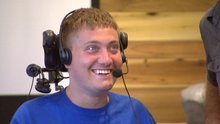 Brian suffered a spinal cord injury that has left him paralyzed from the neck down. However, he is determined to walk again and works extremely hard to make each small step towards his recovery. His dad has dedicated his time and energy to be Brian's personal caretaker. He attends college with Brian and takes care of the physical therapy sessions that must happen every day in order to strengthen Brian's muscles.
During the show, they introduce two other men who suffered paralyzing injuries similar to Brian. One man now runs in marathons, and the other just walked his first mile. Their message to Brian is clear: Believe, work hard, and you will succeed.
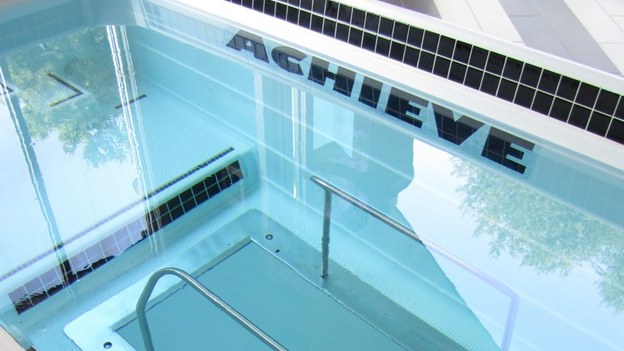
The makeover team installs a therapy pool in the Keefer home to provide vital aqua therapy to Brian. The side of the pool is decorated with the word ACHIEVE to remind Brian that each small step is an achievement and will lead to his goal of walking again. Watching Brian in the pool at the end of the show brought tears to my eyes. In the water, where the pull of gravity is negated, Brian can move his arms freely and he can stand.
In my last blog entry I encouraged parents to tell their children what they have done well when they play a piece. We want them to understand that every step, no matter how small, is an achievement. Small achievements help us reach large goals. That goal might be to learn the second Minuet in G in book 2, to finish an entire Clementi Sonatina, to write a computer program, or to reach a business goal. The life applications are endless.
Are you helping your child learn how to achieve?
Here is a link to the second part of the Extreme Makeover: Home Edition show. This part contains the message about achievement. You will be inspired by the Keefer family!
http://abc.go.com/watch/extreme-makeover-home-edition/SH559052/VD55149279/keefer-family-part-2
Friday, October 21, 2011
"Success Breeds Success"
Dr. Shinichi Suzuki focused a lot on taking small steps in the learning process so that each child is sure to succeed. By dividing skills or difficult passages into smaller units, the student is able to master each step and to gain confidence as they continue learning. Every child is different, and not all students will need every small step. As I work with my students during lessons I am constantly learning more about them and I try to present skills and musical pieces in a way that will help them do their best with confidence.
As home teachers, parents can continue this process of success. Cultivate a positive environment by giving specific comments on what the child did well. If, for example, your child plays an excellent, soft piano section during Allegretto 1, tell them how well it worked. Even if (or perhaps especially if) you think it was an accident and they were unaware of what they did, draw attention to the positive thing you observed in their playing. They will happily work to repeat that success.
As your child works on each step they have been assigned, acknowledge the effort they make. Praise each achievement.
If your child is really struggling with a song, look for a way to create a smaller step to work on. If you are not sure what to do, please feel free to call me! I would rather find a way to ensure positive success than have you wait and endure a frustrating week of practice with little progress.
"Success breeds success," Dr. Suzuki said, and one positive practice session motivates students and parents for the next day's practice.
Monday, October 3, 2011
Inspirational Listening
 Every week the show "From the Top" airs on PBS and on NPR. This wonderful show features young musicians with incredible ability.
This past week featured a Suzuki piano student, 8 year old Gavin George. He is the youngest to be selected to play on the show!
Click here to hear the whole From the Top episode.
For more from Gavin, visit his YouTube Channel.
Subscribe to:
Posts (Atom)